ABA in plain language
Applied Behavior Analysis (ABA) is an evidence-based approach to understanding how behavior and environment affect each other, and to using that understanding to build helpful skills. It is not one single technique. It is a toolbox of methods that have been researched and refined since the 1960s, and it is recommended by the American Academy of Pediatrics as part of care for children with autism.
ABA has also changed a great deal over the decades. Many families have heard about older styles of therapy that relied on repetition and compliance. Modern, assent-based ABA looks very different, and it is worth knowing what to look for.
What "assent" actually means
As a parent, you give consent: legal permission for your child to receive services. Assent is your child's own agreement to participate, shown moment to moment through words, gestures, facial expressions, body language and whether they move toward or away from an activity.
Assent can change during a session. A child who was happily building a tower may start turning away, covering their ears or saying "all done." In assent-based care, those signals matter. The therapist pauses, adjusts the activity, offers a choice or gives a break, rather than insisting the task be finished.
What it looks like in a real session
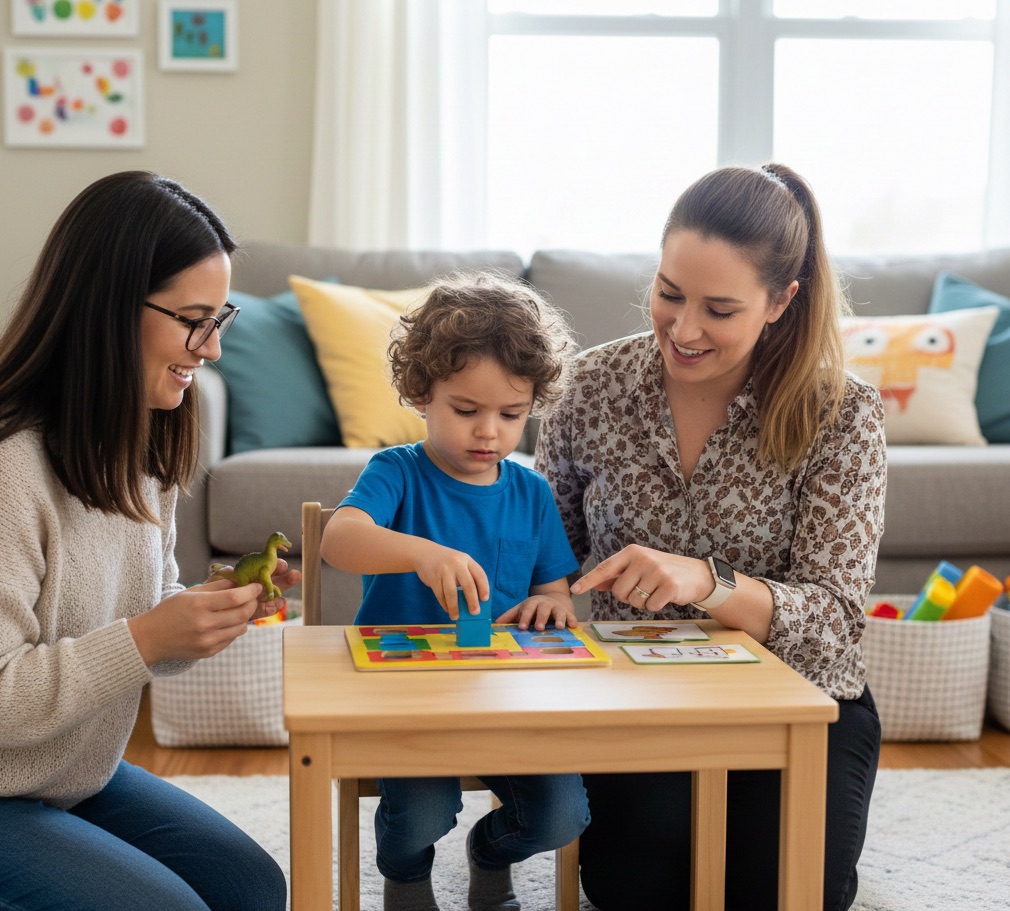
An assent-based session is built around your child's interests. Instead of sitting at a table drilling flashcards, a therapist might use a favorite game, toy or routine as the setting for learning. Skills like these are practiced naturally through play:
- Turn-taking during a board game or rolling a ball back and forth
- Requesting by asking for the next puzzle piece, snack or song
- Shared attention by looking at a book or a bubble together
- Fine motor skills through drawing, building and crafts
You will also notice that the therapist spends time building rapport, offers choices throughout, and honors breaks. Behind the scenes they collect data on progress, and a Board Certified Behavior Analyst (BCBA) reviews it regularly and adjusts the plan.
Why it matters
Learning is easier when a child trusts the people teaching them. When a child's signals are respected, sessions become something they can feel comfortable in rather than something they have to get through. It also teaches an important lesson in its own right: that their communication works, and that the adults around them are listening.
Questions to ask any ABA provider
Whether you choose us or another provider, these questions help you understand how a team really works:
- How do your therapists recognize when my child wants to stop, and what do they do next?
- How much of each session is play-based or built around my child's interests?
- How are goals chosen, and how will I be involved in choosing them?
- How often does a BCBA supervise sessions and review my child's data?
- What kind of parent and caregiver training is included?
How we practice at Snowflakes ABA
Snowflakes ABA was founded in 2016 by a mother who became a clinician for her son with autism. That lived experience shapes everything we do. Every program is designed by a BCBA after an individual assessment, sessions are assent-based and play-led, and parent coaching is built in so progress carries over into everyday life. Every clinician also completes up to four background checks before entering your home.
You can read more about how we practice or explore our services.